
BLOG
Uncommon Growth Leader: How to Lead with Creativity and Collaboration
Uncommon Growth Leaders is an article series featuring bold leaders driving faster, smarter, more sustainable, more human and more actionable growth — what we call uncommon growth.
Chiaki Nishino, President of Prophet, sat down with Michelle Froah, a global marketing and innovation leader, to explore the leadership traits needed to drive impact in a world that’s anything but ordinary. In a conversation packed with insight and real-world examples, Michelle opens up about challenging legacy thinking, co-creating across silos, and why slowing down can sometimes help you move faster.
In today’s high-pressure environment, there’s constant pressure to deliver growth. How do you push boundaries when it’s often easier or expected to do things the way they’ve always been done?
Michelle Froah: One of the most powerful skills I lean on is co-creative problem solving. It’s not about having all the answers, it’s about bringing together brilliant people from across the business, especially those who’ve been working in silos and building solutions together. When teams feel ownership and safety to challenge norms, innovation happens.
A great example is when I was working at CoverGirl. At the time, the “eyes” category — mascara, eyeshadow, eyeliner — was seen as a small piece of the business. But when we dug into the data, we found that eyes had higher velocity and margin than any other category. That insight reframed how we approached strategy and led to innovations like LashBlast, which ultimately elevated the entire brand. It was a team effort powered by data, creativity and cross-functional collaboration.
That’s a perfect example of disruptive thinking. What leadership trait do you rely on to drive that kind of disruptive change?
MF: Hands down: collaboration. It’s often called a “soft skill,” but in reality, it’s one of the most durable leadership capabilities. At ETS, we tackled a full transformation: business strategy, brand and innovation. But we couldn’t do it alone. ETS is a 75-year-old nonprofit with a deep research legacy, so we had to bring everyone along from researchers to business units, to functions including marketers. Only by co-creating together did we launch a new brand and strategy in under nine months.
People think rebranding is about logos and colors. It’s not. It’s about aligning everyone around a shared mission. When we unveiled the new brand, everyone walked out as a brand ambassador. That only happens when transformation is co-owned.
Sounds like leading change requires both vision and execution. How do you balance the two?
MF: You absolutely need both. When you set a bold vision, and then break it into tangible building blocks, you make big change feel possible and doable. Leaders need to set a future that feels bold, even a little scary, but also provide clear steps so teams see how to get there.
I’ve seen this in practice at both Samsung and ETS. At Samsung, we rebuilt customer trust after the Note7 crisis by directly engaging our most loyal customers and partnering our marketing with customer service, something that hadn’t been done before. At ETS, we ensured that transformation wasn’t just a marketing initiative, but something embedded across business units, research and operations.
In both cases, it was about setting a vision and then collaborating across silos to make it real.
How do you stay inspired to lead through all this complexity and pressure?
MF: Two things: First, I stay close to the work. I host working sessions, not just decision meetings. I want my teams to feel like we’re in it together not just presenting for my approval. It builds trust, encourages team development and gets better solutions faster.
Second, I look outside the walls of the organization. I stay active with groups like the ANA and The Marketing Society, sit on advisory boards and take the opportunity to mentor and be mentored.It keeps me curious, humble and open to ideas from completely different industries and perspectives.
Collaboration clearly plays a big role in your leadership style. How do you build a team culture that supports creativity and experimentation?
Michelle: You’ve got to embed it in the culture. It starts with accountability and investment in talent. At P&G, where I spent 18 years, 50% of your performance rating was based on results and the other 50% on organizational capability — how you developed your teams and others across the organization. That instilled in me a responsibility to grow talent that delivers outcomes, not just deliver outcomes.
So I always ensure that my teams have personal development objectives. Growth can mean deepening expertise or stepping into new, uncomfortable spaces to expand capabilities. Either way, it forces collaboration, mentoring and continuous learning.
What’s been one of your biggest leadership challenges to drive growth?
MF: The biggest challenge is often inertia, the resistance to new ways of thinking. But if you can tap into people’s sense of purpose and show them the value they’re creating, you turn skeptics into lifelong partners.
Transformation is hard and can invoke skepticism. At Samsung, during the Note 7 crisis, we had to rebuild trust. And we did this by engaging our most loyal customers and working hand-in-hand with the customer service team to create new experiences like white-glove service. It pushed us to innovate in ways we hadn’t before.
At ETS, launching a new business unit and workforce solution was an investment that required significant buy in across the organization. But when you tap into people’s desire to make a difference, you gain an opportunity to build relationships that may turn into lifelong partnerships.
Final question: What’s the anchor point of your leadership — something you rely on no matter where you’ve worked?
MF: I’m naturally driven, fast-paced and not afraid of change or risk. One of my favorite poems is The Road Not Taken, because I’ve always chosen the less-traveled path.
But I’ve learned that sometimes slowing down helps you go faster. When you give others time to catch up emotionally and strategically you get stronger buy-in, better ideas and faster momentum in the long run.
So yes, I still love a good sprint. But I now know when to pause and bring people along. That’s how you turn a big idea into a movement.

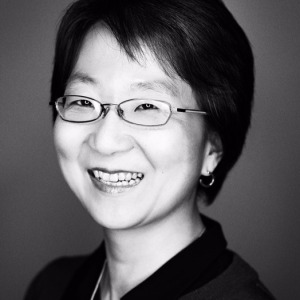
Michelle Froah is an accomplished global executive recognized for driving business transformation, modernizing brands, and leading digital and AI-enabled growth across complex global organizations. She most recently served as Global Chief Marketing & Innovation Officer and SVP of Corporate Solutions at ETS, where she helped return the company to profitable performance and built new growth pathways through enterprise innovation, AI strategy and the launch of Futurenav, a workforce solutions venture.
Across senior roles at MetLife, Samsung, Kimberly-Clark, and Procter & Gamble, Michelle has shaped global brands, guided digital transformation, strengthened customer-centric strategy, and scaled organizational capability across diverse, regulated, and high-growth industries. Her leadership has been recognized with industry honors including AdWeek’s AI Trailblazer Power 100, Campaign’s 40 Over 40, Business Insider’s CMO to Watch and multiple Brand Innovators Top 100 Women distinctions.
Don’t Miss a Beat
Sign up to receive our latest insights.
FINAL THOUGHTS
This conversation is part of our ongoing Uncommon Growth series, where we explore what’s possible when senior leadership aligns not just on strategy, but on how to achieve uncommon growth. Personify Health’s journey — powered by a strong CEO-CMO partnership, a new brand and bold thinking — offers a blueprint for driving performance through clarity, trust and creative disruption.